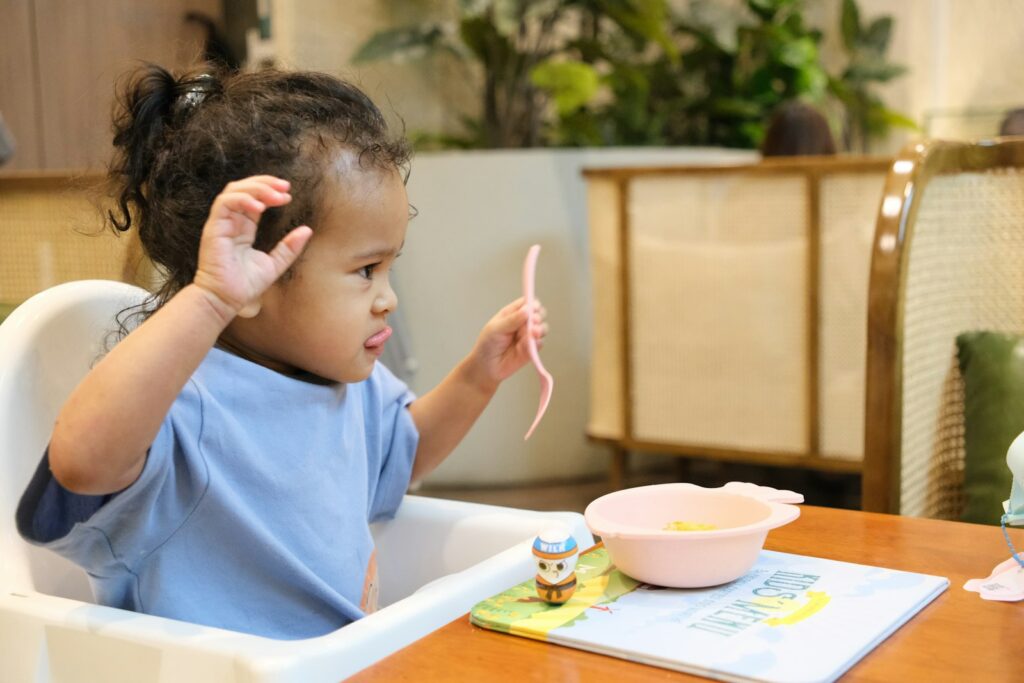
The short answer: Most babies are ready to start solid foods around 6 months, when they can hold their head steady, sit up with support and show interest in what you’re eating. Start with iron-rich foods, introduce common allergens like peanut and egg early, and keep breast milk or formula as your baby’s main source of nutrition until their first birthday.
Starting solids is one of the most exciting milestones of the first year, and it’s one of the topics parents ask me about most. Here’s what I tell families in my practice, from the first spoonful to the first birthday.
When should babies start solid foods?
The American Academy of Pediatrics (AAP) recommends starting solids at around 6 months, and not before 4 months. Age is only part of the picture, though. Your baby is likely ready when they:
- Hold their head and neck steady
- Sit up with support
- Watch you eat, reach for your food or open their mouth when a spoon comes near
- Have lost the tongue-thrust reflex that pushes food back out of the mouth
If your baby was born early or has trouble with feeding, talk with your pediatrician about the right timing.
What are the best first foods for baby?
There’s no magic first food. I like to start with iron-rich foods, because the iron babies store before birth starts to run low around 6 months. Good options include:
- Iron-fortified infant cereal, such as oat or multigrain
- Pureed or finely shredded meat and poultry
- Mashed beans or lentils
- Well-cooked egg
From there, add a wide range of vegetables and fruits. Offer different flavors and textures early and often. Babies who taste lots of foods in the first year tend to have an easier time later, and it’s a head start on avoiding picky eating. Soft-cooked salmon and other low-mercury fish add omega-3 fats that support brain development.
How much should my baby eat?
Start small, with a teaspoon or two once a day. Over the next few months, follow your baby’s hunger cues and work up to two or three small meals a day. Babies tell you when they’re done: they turn their head away, close their mouth or push the spoon away. Respect those signals, even if the bowl isn’t empty.
Baby feeding by age at a glance
Age | What to offer | Texture |
|---|---|---|
Birth to 4–6 months | Breast milk or formula only | Liquid |
About 6 months | Iron-rich foods, vegetables, fruits and common allergens, one new food at a time | Smooth purees, thin mashes or soft finger-length strips |
7–9 months | A wider variety of vegetables, fruits, proteins and grains | Thicker mashes, soft lumps, soft finger foods |
9–12 months | Most family foods, cut small and soft | Chopped table foods |
Breast milk or formula stays the main drink all year. After 6 months, babies can have small sips of water from an open or straw cup with meals.
When should I introduce peanut, egg and other allergens?
Earlier than many parents expect. Current guidance supports introducing common allergens in the first year, starting around 6 months. Research has shown that giving peanut early can lower a child’s chance of developing a peanut allergy.
- Peanut: thin smooth peanut butter with water, breast milk or formula, or stir peanut powder into a puree. Never give whole peanuts or a spoonful of thick peanut butter.
- Egg: offer it well cooked, scrambled or hard-boiled and mashed.
- Others: dairy (yogurt and cheese), wheat, soy, fish, shellfish, sesame and tree nuts (as thinned nut butter).
Introduce one new allergen at a time. Once your baby tolerates it, keep it in the rotation a few times a week. If your baby has severe eczema or a known food allergy, check with your pediatrician first. We may suggest testing or giving the first taste in the office.
Watch for hives, swelling, vomiting or trouble breathing after a new food. Call 911 if your baby has trouble breathing or swelling of the face or lips.
Purees or baby-led weaning?
Both work, and many families do a mix. Baby-led weaning skips purees and starts with soft finger foods about the size of an adult finger, such as roasted sweet potato wedges or ripe avocado slices. Whichever you choose, keep your baby sitting upright and stay with them for every bite.
Some gagging is common and normal as babies learn. It can be a little noisy, their face may turn red, and they usually work it out on their own. Keep a close eye on your little one while they are eating. If you haven’t yet taken an infant
choking and CPR class, this is something that all parents and caregivers should take.
What foods should babies avoid?
- Honey before 12 months, because of the risk of infant botulism
- Cow’s milk as a drink before 12 months (yogurt, cheese and milk used in cooking are fine)
- Juice (unless constipated, then prune juice can help)
- Choking hazards such as whole nuts, whole grapes (quarter them lengthwise), popcorn, hard raw vegetables, hot dog rounds and spoonfuls of nut butter
- Added sugar and extra salt
Keep it relaxed
Early meals are about exploring. Your baby is learning tastes, textures and how to move food around in their mouth, and a lot of it will end up on the floor. Breast milk or formula is still the main source of nutrition for the first year, so follow your baby’s cues and enjoy the mess.
Frequently asked questions
Can I start solids at 4 months?
Some babies show readiness signs between 4 and 6 months. The AAP advises against starting before 4 months, due to increase in childhood obesity. If you’re thinking about starting solids before around 6 months, it’s best to talk with your pediatrician first.
When can babies drink water?
After about 6 months, offer small sips of water from an open or straw cup with meals. Before 6 months, babies get all the fluid they need from breast milk or formula.
Should I make my own baby food?
Either homemade or store-bought is fine. If you buy jars or pouches, check labels and avoid any with for added sugar. Always use a spoon to teach your baby how to eat, instead of having babies suck directly from a baby food pouch. Rotate grains such as oats, barley and quinoa instead of relying on rice cereal, which can contain more arsenic.
How do I know if my baby is allergic to a food?
Signs of a reaction include hives, swelling, vomiting and trouble breathing, usually within minutes to two hours of eating. Call your pediatrician for mild symptoms and 911 for trouble breathing or facial swelling or anything concerning.
Questions about your baby’s first foods? Calabasas Pediatrics families can book a visit any time. For a month-by-month feeding plan, my book What to Feed Your Baby walks you through the whole first year.
About Dr. Tanya Altmann. Dr. Altmann is a board-certified pediatrician, a Fellow of the American Academy of Pediatrics and the founder of Calabasas Pediatrics in Calabasas, California. She is the author of What to Feed Your Baby and Mommy Calls. Known as the Longevity Pediatrician, she helps families build the habits that support a child’s health for life.
Sources