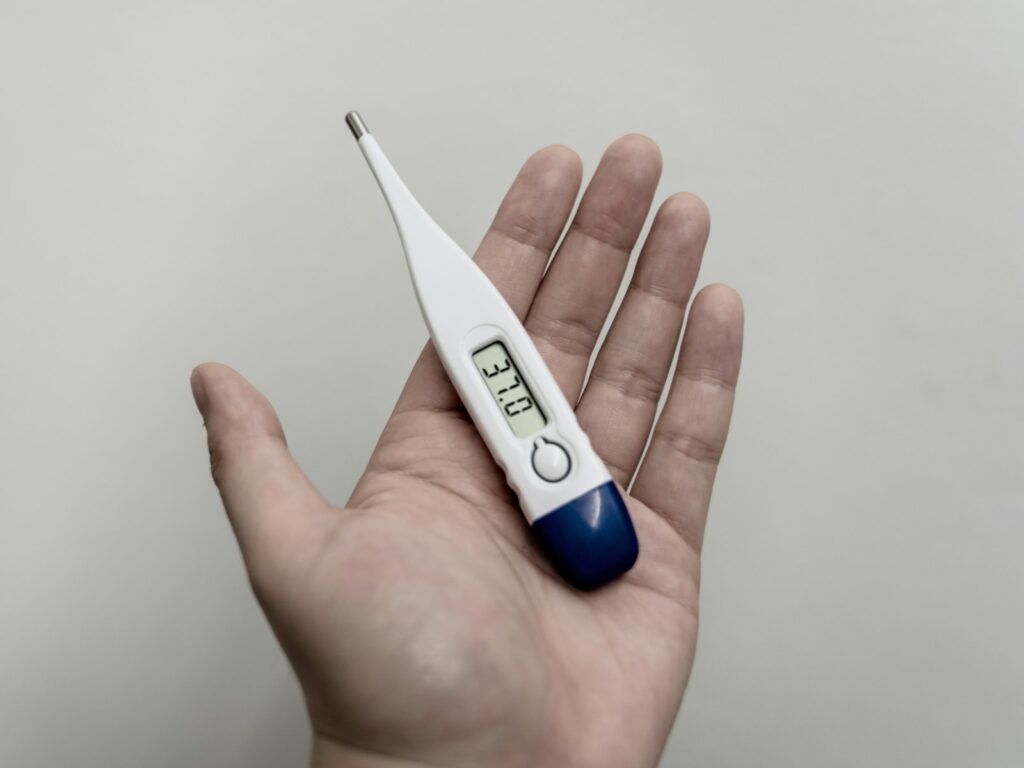
The short answer: A fever is a temperature of 100.4°F (38°C) or higher. In most children it’s a sign the body is fighting an infection, and it can be managed at home. Call your pediatrician right away if your baby is under 3 months old and has a fever, or if your child seems very sick. Also call if the fever lasts more than 24 hours in a child under 2, or more than 3 days in a child 2 or older.
Few things make a parent’s heart race like a hot forehead in the middle of the night. The good news is that most fevers are the body’s healthy response to an infection. Here’s how to tell when you can care for your child at home and when it’s time to call.
What temperature counts as a fever?
A temperature of 100.4°F (38°C) or higher is a fever. A higher number doesn’t always mean a more serious illness, which is why how your child looks and acts matters so much.
How should I take my child’s temperature?
- Babies under 3 months: a rectal temperature gives the most accurate reading.
- Any age: a forehead (temporal artery) thermometer is quick and easy.
- 6 months and older: an ear thermometer is an option.
- Age 4 and older: an oral thermometer works once your child can hold it under the tongue.
- Armpit readings are the least accurate. Use them to screen, and confirm another way if you’re unsure.
Is a fever dangerous?
Fever itself isn’t harmful. It’s one of the ways the body fights germs, and it doesn’t cause brain damage. Some children between 6 months and 5 years have a short seizure with a fever, called a febrile seizure. They are frightening to watch but usually harmless. Call your pediatrician after any seizure, and call 911 if it lasts more than 5 minutes.
Treat the child, not the number
If your child is drinking, playful when the fever comes down and resting comfortably, you can usually care for them at home. To help them feel better:
- Offer plenty of fluids
- Let them rest, and dress them in light layers
- Use acetaminophen or ibuprofen for comfort if your pediatrician recommends it, dosed by your child’s weight
Ibuprofen isn’t for babies under 6 months, and children should never be given aspirin. You don’t need to wake a sleeping child to give fever medicine.
When should I call the pediatrician right away?
- Your baby is under 3 months old with a temperature of 100.4°F or higher
- Your child has trouble breathing, is very sleepy or hard to wake, or can’t be consoled
- There are signs of dehydration, such as very few wet diapers or no tears
- There’s a stiff neck, a severe headache or sore throat, or a new rash that doesn’t fade when pressed
- Your child has had a seizure
- The temperature is repeatedly above 104°F (40°C)
- Your child has a heart problem or a condition or medicine that weakens the immune system
When should I call if the fever doesn’t go away?
Call if a fever lasts more than 24 hours in a child under 2, or more than 3 days in a child 2 or older. Also call if your child still seems sick after the fever comes down, or seems to be getting worse.
Trust your instincts
You know your child best. If something feels off, or you’re simply worried, call. That’s what your pediatrician is there for.
Frequently asked questions
What temperature is too high for a child?
Call your pediatrician if your child’s temperature is repeatedly above 104°F (40°C). For babies under 3 months, any temperature of 100.4°F or higher needs a call right away.
Should I alternate acetaminophen and ibuprofen?
Ask your pediatrician first. Alternating can lead to dosing mix-ups, and one medicine is usually enough to keep a child comfortable.
Can teething cause a fever?
Teething can cause a slight rise in temperature, but not a true fever of 100.4°F or higher. If your teething baby has a fever, look for another cause.
Should I give my child a cold bath to bring a fever down?
No. Cold baths and alcohol rubs can make children shiver and feel worse. Light clothing, fluids and rest are enough.
Not sure whether your child needs to be seen? Calabasas Pediatrics families can call the office, day or night.
About Dr. Tanya Altmann. Dr. Altmann is a board-certified pediatrician, a Fellow of the American Academy of Pediatrics and the founder of Calabasas Pediatrics in Calabasas, California. She is the author of What to Feed Your Baby and Mommy Calls. Known as the Longevity Pediatrician, she helps families build the habits that support a child’s health for life.
Sources