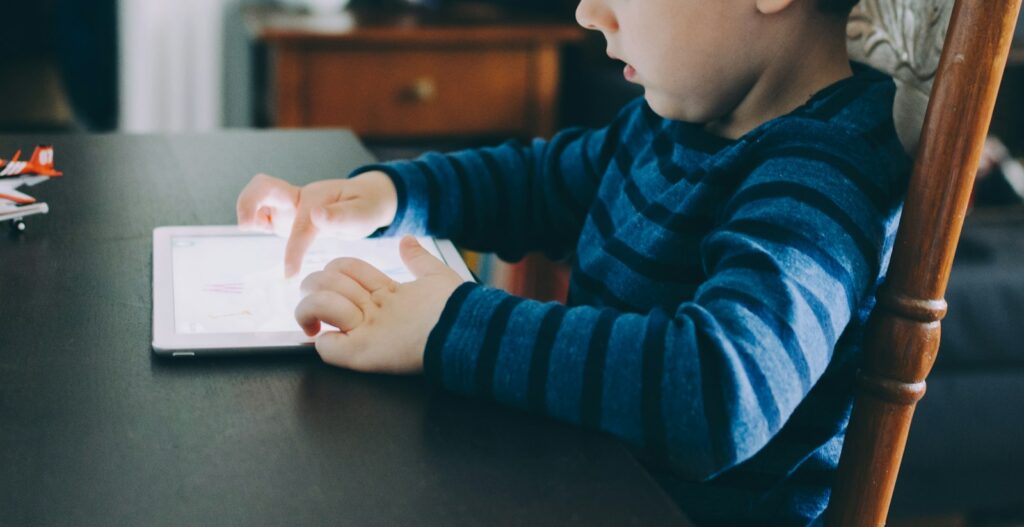
The short answer: For babies under 18 months, the AAP advises avoiding screens other than video chatting. For toddlers 18 to 24 months, pick high-quality shows and watch together. For ages 2 to 5, about an hour a day of high-quality, shared viewing is a sensible guide. In 2026 the AAP updated its guidance to focus less on minutes and more on what kids watch, how apps are designed and whether screens crowd out sleep, play and family time.
Screens are part of family life now. The goal is to use them on purpose, not to be perfect. Here’s how I explain the guidelines to parents, age by age.
Screen time by age at a glance
Age | Guidance |
|---|---|
Under 18 months | No screens except video chatting with family and friends |
18–24 months | If you introduce media, choose high-quality programs and watch together |
2–5 years | About 1 hour a day of high-quality content, ideally watched with a parent |
6 and up | Consistent limits that protect sleep, activity, homework and family time |
How much screen time is OK for a baby under 18 months?
Ideally none, apart from video chatting. Babies learn language and social skills best from face-to-face time with the people who love them. Video chats with grandparents are fine, especially if you help your baby engage.
What about toddlers 18 to 24 months?
If you decide to introduce digital media, choose high-quality programs and watch together. Talk about what you’re seeing, name the animals and sing the songs. That back-and-forth is where the learning happens. Toddlers this age have a hard time learning from a screen on their own.
How much screen time should a 2- to 5-year-old have?
About one hour a day of high-quality content, ideally watched together, is a good guide. Look for shows that are slow-paced, made for young children and free of ads. Turn off autoplay so one episode doesn’t become four.
What about kids 6 and older?
Set consistent limits and make sure screens don’t replace sleep, physical activity, homework or family time. As kids get older, talk with them about what they watch and play, and agree on the rules together.
What changed in the AAP’s 2026 screen time guidance?
In January 2026 the AAP released a new policy statement, “Digital Ecosystems, Children, and Adolescents.” It asks parents to move beyond strict time limits and focus on quality, context and conversation. It also puts more responsibility on tech companies, pointing to design features like endless scrolling and autoplay that can affect kids’ sleep, mood and attention.
For families, the practical advice is the same at heart: know what your child is watching, watch with them when you can and protect time for sleep, play and being together.
How do screens affect sleep?
Screens close to bedtime can make it harder for kids to fall asleep, and devices in the bedroom can cut into sleep through the night. The AAP recommends screen-free time before bed, especially the hour before.
Tips for every family
- Create a Family Media Plan together
- Keep devices out of bedrooms at night
- Make meals screen-free
- Turn off background TV when no one is watching
- Model the habits you want to see
Frequently asked questions
Is educational TV good for babies?
Babies under 18 months don’t learn well from screens, even from programs marketed as educational. Talking, reading and playing with your baby does far more.
Is video chatting with grandparents OK for babies?
Yes. Video chatting is the one exception the AAP makes for babies under 18 months, because it’s a real two-way conversation and so important for the family to have this time to connect and stay in touch.
Does background TV count as screen time?
It can. Background TV cuts down on how much parents talk with young children and pulls attention from play. Turn it off when no one is watching.
Is it OK to use a screen to calm my child down?
Now and then, it’s fine. If screens become the main way your child calms down, they miss the chance to learn to manage big feelings. Try other calming tools first.
Have questions about your family’s media use? Calabasas Pediatrics families can book a visit and we’ll make a plan that fits your home.
About Dr. Tanya Altmann. Dr. Altmann is a board-certified pediatrician, a Fellow of the American Academy of Pediatrics and the founder of Calabasas Pediatrics in Calabasas, California. She is the author of What to Feed Your Baby and Mommy Calls. Known as the Longevity Pediatrician, she helps families build the habits that support a child’s health for life.
Sources